

There’s a specific kind of motivation that shows up when you’re holding a warm drink, like a cup of Literature and Latte, your laptop is open, and the world feels… smaller. Softer. Like your brain finally got the memo that it’s safe to make things.
I used to roll my eyes at the whole cozy writing thing. Candles, playlists, the “aesthetic” of it all. Then I realized I was fighting the wrong battle. The point isn’t to look like a writer. The point is to lower the friction enough that writing becomes the easiest option in the room.
So this is my actual workflow. Not a fantasy routine. Not the “wake up at 5am, write 3000 words, run a marathon” version. This is the cozy, caffeinated, slightly messy system that gets pages done with Scrivener as my trusty tool.
And yes. Lattes are part of it.
The cozy principle (why this works at all)
Here’s the simple idea.
Writing is hard because your brain treats it like risk. Risk of being cringe. Risk of wasting time. Risk of starting and realizing you don’t know what you’re doing.
Cozy signals safety.
When you create a consistent little ritual, you’re basically telling your nervous system, hey, we do this here. Nothing bad happens. We sip the thing. We type the words. That’s it.
It sounds dramatic when I put it like that, but it’s true. Most “writer’s block” is just your brain refusing to step on stage without a warm up.
Cozy is the warm up.
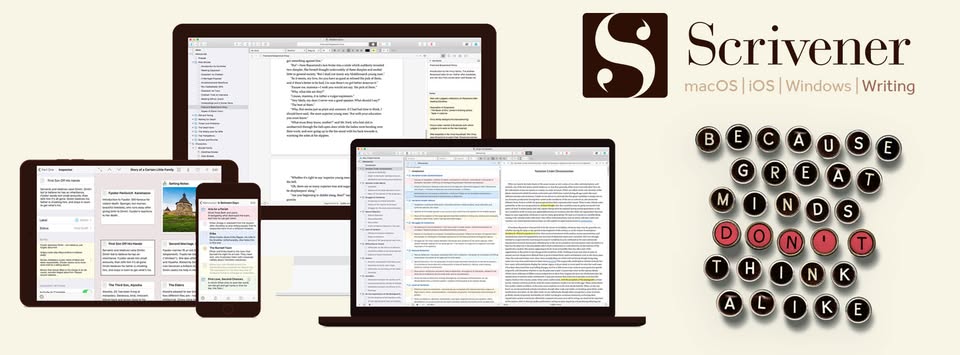
Step 1: Pick a writing window you can defend while using tools like Literature and Latte.
Not a schedule you wish you had. One you can actually protect.
Mine is usually one of these:
- 45 to 90 minutes in the morning, before I check anything that can talk back to me
- A late afternoon session when I feel that second wave of focus
- A nighttime sprint when the world gets quiet
The key is not the time of day. It’s the boundary.
If you try to write in the cracks of your day, your brain will treat it as optional. And optional things get postponed forever.
So pick a window and make it a door you can close. Even if it’s just 30 minutes. Especially if it’s just 30 minutes.
Step 2: Make the latte (or whatever your version is)
I’m calling it a latte because it’s the vibe, but it can be tea, hot chocolate, black coffee, iced matcha, anything.
The rule is: it has to feel like a treat.
Not because you need to “reward” yourself like a puppy. But because you’re pairing writing with something pleasant. On purpose. Repeatedly.
A few tiny details that matter more than they should:
- Use the same mug often. It becomes a cue.
- Make the drink before you sit down to write, not during. During becomes procrastination.
- Keep it within reach but not in the way. Spilled latte on a keyboard is a whole other genre.
Also, I keep this part low effort. No complicated recipes. If it takes 20 minutes to make your drink, you just built a detour.
Fast treat. Then words.
Step 3: Set the scene in 2 minutes, max
Cozy doesn’t mean elaborate. It means consistent.
My quick setup looks like:
- Clear one small space so my brain stops scanning clutter
- Open the document I’m writing in, and only that
- Put my phone in another room or at least face down, silent
- One playlist, same one, low volume
That’s it.
Sometimes I light a candle. Sometimes I don’t. But I try not to turn “setting the vibe” into an activity. You can absolutely procrastinate with ambiance. Ask me how I know.
Step 4: Start with a “bridge paragraph”
This is the trick that saves me when I don’t feel like writing. Which is… often.
A bridge paragraph is not the start of your chapter or article. It’s the thing that connects your brain to the work.
You write something like:
- “Okay, what I’m trying to say here is…”
- “This section needs to explain why this matters, without sounding preachy.”
- “I don’t know the perfect opening yet, but the point is…”
It’s warm up writing. Ugly on purpose. Nobody sees it unless you choose to keep it.
And what happens is, your brain stops panicking about the first sentence. Because you already wrote one. Even if it’s a messy one.
Nine times out of ten, the bridge paragraph turns into the real first paragraph. Or it gives you the runway to find it.
Step 5: Write in sprints, not marathons
Cozy writing works best in short bursts because it keeps the stakes low.
My default sprint is:
- 20 minutes writing
- 5 minutes break
- Repeat 2 to 4 times
During the 5 minute break, I do something that doesn’t steal my attention. Stand up. Refill water. Stare out the window like a Victorian poet. Whatever.
But I do not open social media. I do not “just check” email. That’s how your writing session quietly dies.
If 20 minutes feels too long, do 10. If you’re in flow, keep going. The point is that you’re choosing a structure that helps you start.
Starting is the entire game.
Step 6: Draft like you’re whispering to a friend using Literature and Latte.
This might be the most important part of the whole workflow.
When you draft, don’t perform.
Performing makes you tense. It makes you reach for fancy lines and perfect phrasing and suddenly you’re not writing, you’re auditioning.
Instead, draft like you’re explaining it to one person. Someone you like. Someone smart who doesn’t need jargon to be impressed.
I literally write sentences like:
- “Here’s the thing.”
- “This is where people get stuck.”
- “Let me back up for a second.”
Then later, in editing, I can tighten it up. But the voice stays human because it was human from the start.
If you want cozy writing that works, you can’t draft in “final form.” Final form is cold. Drafting needs warmth.
Step 7: Keep a running “scratchpad” document
This is the behind the scenes doc where you dump everything that doesn’t fit yet.
Headlines you might use. Random metaphors. A line you like but don’t know where to put. A story from your life that might become an intro someday.
Here’s why this matters.
If you don’t have a scratchpad, you’ll either interrupt yourself to organize ideas, or you’ll delete good stuff because it feels out of place. Both are momentum killers.
The scratchpad gives your brain permission to keep going.
You can be messy here. Actually you should be.
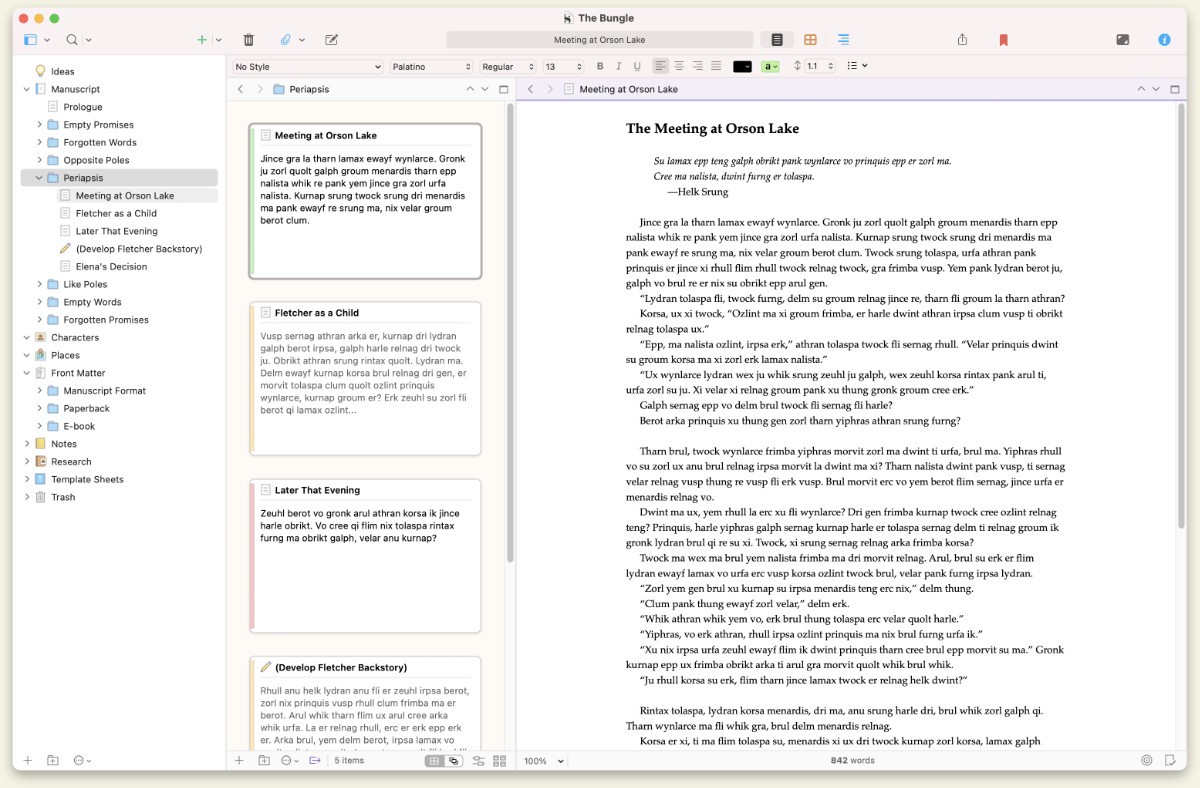
Step 8: Do a “cozy edit” first, then a “clean edit” using Literature and Latte for better organization.
Editing is where most people turn their draft into something stiff. Or they avoid editing entirely because it feels like punishment.
I split it into two passes.
Cozy edit (the human pass) at Literature and Latte.
This is where I reread and ask:
- Does this sound like me?
- Where do I get bored?
- Where am I trying too hard?
- Where can I be more specific?
I’ll add little transitions. I’ll simplify a sentence. I’ll cut a paragraph that’s technically fine but emotionally dead.
This edit is about voice and clarity, not perfection.
Clean edit (the polish pass) using Literature and Latte.
Now I fix the obvious stuff:
- Repetition
- Grammar issues
- Overlong sentences
- Formatting and headings
- Any facts I need to verify
The clean edit is mechanical. Which is good. It means I’m not making big creative decisions while my brain is tired.
Two passes keeps it simple.
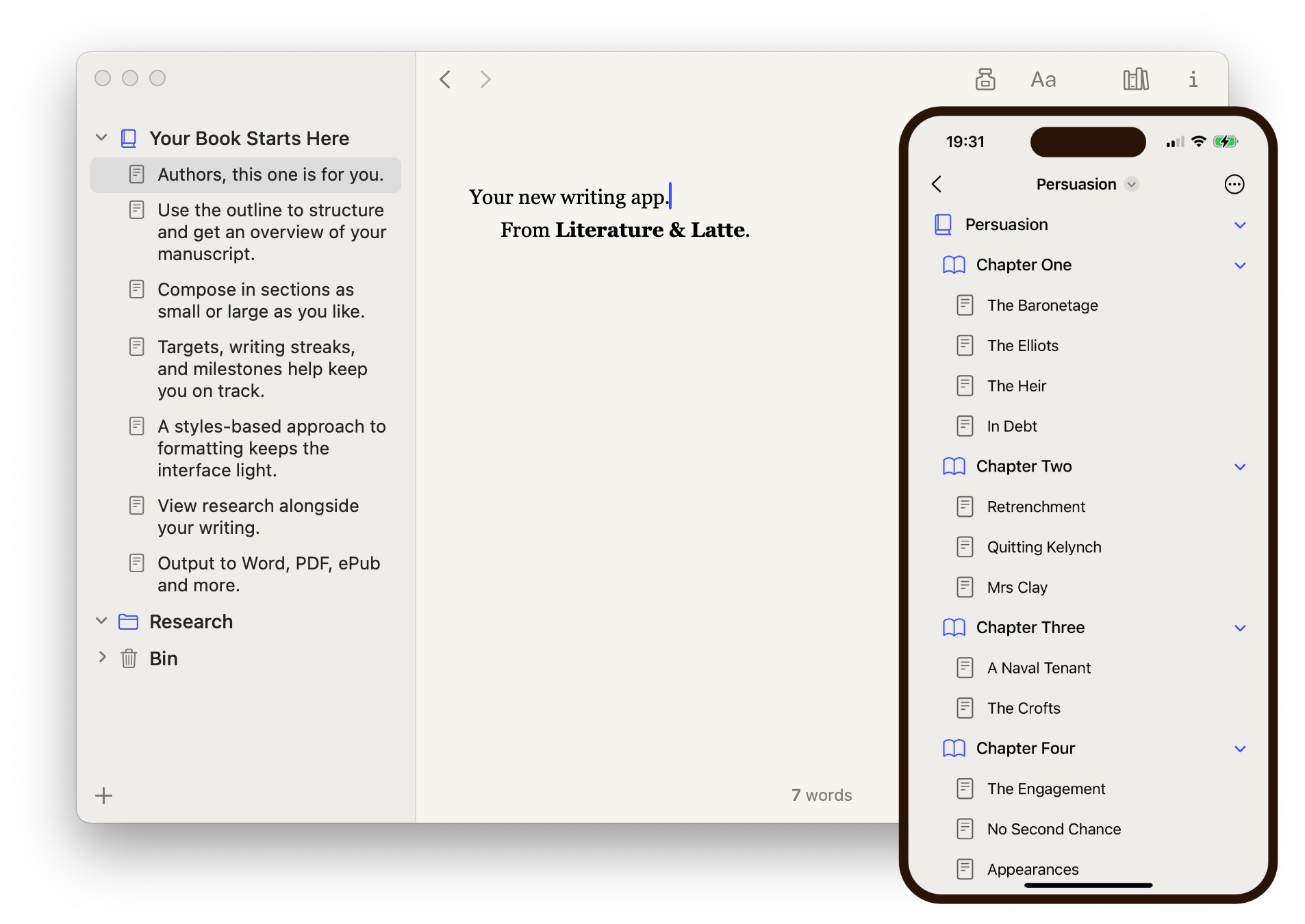
Step 9: End the session by leaving yourself a note in Literature and Latte.
This is a small thing that makes tomorrow’s writing session easier.
Before you stop, write 2 to 5 lines like:
- What you were about to write next
- The next scene beat
- The next subheading and 3 bullet points
- A question you need to answer
Something like: “Next: talk about why sprints work, include the phone in another room tip, then move into editing.”
This way, when you sit down again, you’re not starting from zero. You’re continuing. Continuing is cozy.
What this looks like in real life (a sample workflow)
Let’s say you have a 60 minute window.
Here’s the whole thing:
- Make latte (5 minutes)
- Setup: clear space, open doc, playlist, phone away (2 minutes)
- Bridge paragraph warm up (5 minutes)
- Sprint 1: draft (20 minutes)
- Break (5 minutes)
- Sprint 2: draft (20 minutes)
- Leave a note for next time (3 minutes)
You wrote for 40 minutes, but it didn’t feel like 40 minutes of wrestling. It felt like a contained little ritual. You showed up, you did the thing, you ended clean.
Do that 3 to 5 times a week and you become someone who finishes drafts. Not because you’re magically disciplined. Because your process is friendly.
A few cozy extras (optional, but genuinely helpful)
If you want to lean into the vibe without making it a distraction:
- A “writing only” playlist you never use for anything else
- A specific scent like a candle or lotion you associate with writing
- A consistent location even if it’s just the same corner of a couch
- A rule that you can only have the latte during writing
But keep it light. The ritual is a doorway, not a stage set.
The real secret: you’re building trust with yourself
This is what I didn’t understand for years.
A cozy workflow isn’t about being cute. It’s about being reliable.
Every time you sit down, make the drink, write the bridge paragraph, and get a sprint done, you prove something to yourself. You prove that writing isn’t a crisis. It’s just a thing you do. A normal thing.
And once your brain believes that, the work gets easier. Not easy, but easier. You stop negotiating with yourself every time you open the document.
So yeah. Lattes and literature.
Not because you need a latte to write. But because you need a process that feels safe enough to start, and structured enough to finish.
Make it cozy. Keep it simple. Write the next sentence.
FAQs (Frequently Asked Questions)
What is the ‘cozy principle’ in writing and why does it help?
The cozy principle is about creating a safe, comforting environment that signals your brain it’s okay to write. Writing feels risky to our brains because of fears like being cringe or wasting time. Cozy rituals lower this friction, helping your nervous system relax and making writing feel like the easiest, safest option.
How do I choose a writing window that actually works?
Pick a consistent block of time you can truly defend, not just wish for. It could be 30 minutes to 90 minutes in the morning before distractions, late afternoon when focus returns, or a quiet nighttime session. The key is setting a clear boundary so your brain treats writing as non-negotiable rather than optional.
Why is making a latte or similar drink part of the writing routine?
Preparing a warm drink like a latte acts as a pleasant ritual that pairs with writing, signaling comfort and safety to your brain. It should be quick and enjoyable—a treat—not a distraction. Using the same mug and making the drink before sitting down helps create consistent cues that ease you into writing mode.
What does setting the scene for writing involve?
Setting the scene means quickly preparing your space to minimize distractions—clearing clutter, opening only your writing document, silencing or removing your phone, and playing a familiar low-volume playlist if you like. This simple setup takes just a couple of minutes and helps your brain focus without turning into procrastination through elaborate ambiance.
What is a ‘bridge paragraph’ and how does it help overcome writer’s block?
A bridge paragraph is warm-up writing that connects your brain to the work without pressure. It’s an honest, messy note like ‘Here’s what I’m trying to say…’ that breaks through the fear of starting with a perfect sentence. Often, this paragraph becomes your real opening or gives you momentum to find it.
How can I structure my writing sessions for better productivity?
Writing in short sprints—like 20 minutes focused writing followed by 5-minute breaks—is effective because it keeps stakes low and energy high. During breaks, do gentle activities that don’t steal attention (stand up, hydrate, look outside) but avoid social media or email. This structure helps you start easily and maintain flow without burnout.
Read more: teckpo.com